Ever dreamt of owning a home that truly reflects your success? With a $250,000 salary, that dream is closer than you think. But how close, exactly? What kind of luxury property can you realistically afford? As an experienced mortgage professional at DSLD Mortgage, I’ve helped countless high-earners realize their dreams of homeownership. Let’s discover the key factors that determine your buying power and its possibilities.
The Quick Answer
With a $250k annual salary, you could potentially afford a house priced between $750,000 to $1,500,000 or more, depending on your financial situation, credit score, and current market conditions. You’ll need to consider a jumbo loan for homes priced above $766,550 (the 2024 conforming loan limit).
Key Factors Affecting Your Home Affordability
Imagine your dream home. Got it? Now, let’s talk about how to make that dream a reality with your $250k salary. It’s not as simple as just looking at your income.
- Your Debt-to-Income Ratio (DTI): Lenders want to see that you can comfortably manage your existing debt alongside a new mortgage.
- That All-Important Credit Score: A higher score unlocks better interest rates and loan terms, making a big difference in affordability.
- Your Down Payment: A larger down payment means a smaller loan and potentially lower monthly payments.
- Current Interest Rates: Even small fluctuations in current interest rates can impact how much house you can afford.
- Other Financial Obligations: From student loans to car payments, other financial obligations are all factors in the equation.
- Jumbo Loan Considerations: With a $250,000 salary, you’re likely looking at a jumbo loan, which has its own set of requirements.
Let’s take a closer look at how each of these impacts your homebuying power on a $250,000 salary.
1. Debt-to-Income Ratio (DTI)
$250k a year is fantastic, but lenders look beyond your paycheck. They want to see how much of that income is already spoken for. That’s where your Debt-to-Income Ratio (DTI) comes in. Think of it like this: it’s the percentage of your gross monthly income that goes towards debt payments.
Let’s do a quick DTI check-up, assuming a 43% DTI (a common target for jumbo loans):
- Your Monthly Income: $20,833 ($250,000/12)
- Maximum Allowable Debt Payments: $8,958
That might seem like a lot, but remember, this includes everything — your potential mortgage, car loans, student loans, credit cards…
Pro Tip: Paying down existing debt (especially those car loans) can significantly boost your DTI and get you more homebuying power.
2. Credit Score
With a $250k salary, you’re in a strong position to secure a fantastic mortgage. But your credit score is like your financial report card — it tells lenders how responsible you are with borrowing money. And when it comes to jumbo loans (which you’ll likely need for your dream home), your credit score holds even more weight.
Here’s the breakdown:
- Excellent Credit (760+): You’re a lender’s dream! Expect the lowest interest rates and maximum borrowing power.
- Very Good Credit (740-759): Still excellent! You’ll secure competitive rates and great loan terms.
- Good Credit (720-739): Solid standing. You’ll qualify for good rates and have strong affordability.
- Below 720: It might be a bit trickier to snag a jumbo loan, or you might face higher interest rates.
Bottom line: A higher credit score means more home for your money. It’s worth taking the time to improve your credit score before you start house hunting.
3. Down Payment
Saving for a down payment is a crucial step towards your dream home, especially when you’re earning $250,000 and considering a jumbo loan. The amount you put down can significantly impact your loan terms and overall affordability.
Here’s the down payment game plan for jumbo loans:
- 20% Is Often the Magic Number: It’s typically the minimum down payment required for jumbo loans, and it shows lenders you’re serious about your investment.
- Aim Higher for Better Terms: Putting down 25-30% can often mean lower interest rates and more favorable loan conditions.
- Less than 20%? While sometimes possible, it can be more challenging to secure a jumbo loan with a smaller down payment.
Pro Tip: Work with a DSLD Mortgage expert to explore down payment options and find the sweet spot for your financial situation.
4. Current Interest Rates
Interest rates become a big deal when you’re earning $250,000 and aiming for a luxury home. Even a small shift can significantly impact your monthly payments and how much house you can ultimately afford.
Here’s the current situation as of October 16, 2024:
- Average 30-year fixed mortgage rates are hovering around 6.875%, with an APR of 7.517%. This means that for every $100,000 you borrow, you can expect to pay roughly $669 per month (not including taxes and insurance).
- Remember that the APR includes the interest rate and other fees and costs associated with the loan, giving you a more complete picture of the total borrowing cost.
Why this matters: Higher interest rates mean higher borrowing costs, which can affect your overall affordability. It’s crucial to stay informed about rate trends and work with a mortgage professional to secure the best possible terms for your situation.
5. Other Financial Obligations
You’re earning $250,000 a year, so you might think a hefty mortgage payment is no big deal. But there’s more to the affordability issue than just principal and interest. Luxury homes come with luxury expenses, and it’s crucial to factor those into your budget.
Beyond the mortgage, you can expect to pay:
- Property Taxes: Those property tax payments can be significant, especially in areas with high property values.
- Homeowners Insurance: Protecting your investment comes at a cost.
- HOA Fees: If you’re considering a condo or planned community, be prepared for monthly or annual HOA fees.
While lenders don’t factor these into your mortgage qualification, you need to consider the monthly cost of gas, groceries, entertainment, and those unexpected car repairs. It all adds up.
Depending on your loan type (VA, FHA, and Conventional Loans) and down payment, you might also need mortgage insurance. This adds to your monthly costs, but improving your credit can help reduce or eliminate it.
The bottom line: Take a holistic view of your finances to ensure you can comfortably afford your dream home and maintain your lifestyle.
6. Jumbo Loan Considerations
Earning $250,000 a year likely means you’re aiming for a home that requires a jumbo loan. Why? Because these loans are designed for those seeking mortgages beyond the conforming loan limits (currently $766,550 for most counties). But jumbo loans come with their own set of rules.
- Credit Score Scrutiny: Lenders want to see a strong credit history, typically a score of 720 or higher.
- Down Payment Demands: Be prepared to put down a significant amount, often 20% or more, to show your commitment.
- Interest Rate Considerations: Jumbo loans may have slightly higher interest rates compared to conforming loans.
- Stricter Approval Process: Expect a more thorough review of your financial situation.
- Possible Reserve Requirements: Lenders might require you to have cash reserves to cover potential financial hiccups.
Affordability Scenarios
Conservative Scenario (Conforming Loan):
- 20% down payment
- Excellent credit score (760+)
- 30-year fixed rate at 6.25%
- No other significant debts
Potential Home Price: Around $950,000
- Monthly Payment: ~$7,125 (including estimated taxes and insurance)
- Down Payment: $190,000
Breakdown:
- Principal and Interest: $4,690
- Estimated Taxes and Insurance: $2,435
Moderate Scenario (Jumbo Loan):
- 20% down payment
- Very Good credit score (740-759)
- 30-year fixed jumbo rate at 6.5%
- Some existing debts (e.g., $1,000/month in student loans)
Potential Home Price: Around $1,250,000
- Monthly Payment: ~$9,375 (including estimated taxes and insurance)
- Down Payment: $250,000
Breakdown
- Principal and Interest: $6,315
- Estimated Taxes and Insurance: $3,060
Aggressive Scenario (Jumbo Loan):
- 25% down payment
- Excellent credit score (760+)
- 30-year fixed jumbo rate at 6.25%
- Minimal existing debts
Potential Home Price: Around $1,500,000
- Monthly Payment: ~$11,250 (including estimated taxes and insurance)
- Down Payment: $375,000
Breakdown
- Principal and Interest: $6,950
- Estimated Taxes and Insurance: $4,300
Expert Tips for Maximizing Affordability on a 250k Salary
- Maintain an Excellent Credit Score: This is crucial for securing the best jumbo loan rates.
- Consider a Larger Down Payment: This can significantly improve your terms on a jumbo loan.
- Pay Down Existing Debts: This lowers your DTI, potentially allowing you to qualify for a larger loan.
- Factor in the Total Cost of Luxury Homeownership: Consider maintenance, property taxes, and potential HOA fees.
- Explore Different Jumbo Loan Options: Some lenders offer unique programs for high-income professionals.
- Get Pre-approved: This gives you a clear picture of what you can afford and strengthens your offer in competitive luxury markets.
- Understand the Role of the Mortgage Lender: The mortgage lender grants the money for your home purchase. Private mortgage insurance (PMI) protects the lender against borrower defaults, which can be crucial in securing your loan.
- Consider the Impact of Private Mortgage Insurance: PMI can affect your monthly budget. It is typically required if your down payment is less than 20%. You can stop PMI payments once you reach 20% equity in your home.
The Bottom Line: How DSLD Mortgage Can Help
On a $250,000 salary, you could potentially afford a house worth between $950,000 to $1,500,000 or more, depending on your specific financial situation and local market conditions. This puts you in a strong position in the luxury real estate market across most of the country.
Remember, just because you can qualify for a certain home price doesn’t mean you should stretch your budget to the max. Consider your other financial goals and ensure you’re comfortable with the monthly payments, especially when considering a jumbo loan.
At DSLD Mortgage, we specialize in helping high-income individuals with luxury homebuying, including jumbo loans. Our team of experienced mortgage advisors can:
- Provide a detailed affordability analysis based on your unique financial situation
- Guide you through various jumbo loan options to find the best fit for your income level and financial goals
- Help you understand and improve your credit profile to maximize your buying power
- Assist with the pre-approval process, strengthening your position in competitive luxury markets
- Connect you with real estate professionals who specialize in luxury properties
We know that buying a home at this price point comes with its own set of considerations. Our goal at DSLD Mortgage isn’t just to help you secure a jumbo loan but to ensure you’re making a sound financial decision that aligns with your long-term wealth strategy.
Don’t do this alone. Reach out to us at DSLD Mortgage for a personalized consultation. We’re here to help you realize your luxury homeownership dreams with a mortgage solution tailored to your high-income needs.
With careful planning and expert guidance from DSLD Mortgage, your $250k salary opens up exceptional possibilities in the housing market. It’s all about finding the right balance between luxury and financial prudence. Contact us today to take the first step towards owning your dream home!
How much will your mortgage be? You can use DSLD Mortgage’s Mortgage Calculator to estimate your monthly mortgage payment.
Current mortgage rates holding you back? Don’t miss out on these deals! Buy a home with DSLD Mortgage and take advantage of our limited-time mortgage promotions.
FAQs About Buying a Luxury Home on a $250,000 Salary
You’re earning $250,000 a year, which opens doors to some incredible homes. But the luxury real estate market, especially with jumbo loans, can raise some important questions. We’re here to provide the answers you need.
That’s a great question! While your income is a strong starting point, affordability depends on more than just your salary. Your credit score, debt levels, down payment, and current interest rates all play a role. Generally, with a $250k income, you could potentially afford a home between $750,000 and $1,500,000 or even more. But it’s crucial to get pre-approved for a mortgage to determine your true buying power.
Jumbo loans are specifically designed for homes that exceed the conforming loan limits (currently $766,550 in most areas). This means they often come with stricter requirements, such as:
- Higher credit score expectations (typically 720 or above)
- Larger down payment requirements (often 20% or more)
- Potentially higher interest rates
- More stringent debt-to-income ratio limits
But don’t worry! DSLD Mortgage specializes in helping borrowers tackle the jumbo loan process.
Begin Your Home Search with DSLD Homes
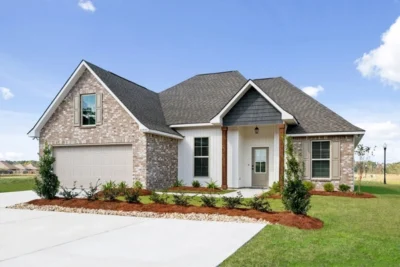
To get a feel for the lifestyle that awaits you in a DSLD Homes community, visit one of their communities throughout the Southern Region.
With a diverse selection of floor plans and communities to choose from, you’re sure to find the perfect fit for your lifestyle.