If you’ve been waiting for the right time to buy a home, 2026 might be the year. After years of bidding wars, waived inspections, and offers tens of thousands over asking, the market is finally shifting. More homes are available. Sellers are willing to talk. Buyers have time to think before they sign.
That doesn’t mean it’s smooth sailing. Mortgage rates are still elevated, prices haven’t dropped much in most areas, and conditions vary widely depending on where you’re buying. The buyers who come out ahead this year will be the ones who show up informed and prepared.
Here’s what you need to know.
Market Conditions and Buyer vs. Seller Dynamics
Not long ago, buying a home meant moving at a sprint. Homes sold in days. Inspections got waived. Buyers piled on with offers well over asking price. That pace has slowed down considerably.
Inventory is up about 20% from a year ago, and the national supply now sits between 3.8 and 4.6 months. A market is considered balanced at 5 to 6 months. We’re getting there, and in some areas, we’ve already arrived.
For buyers, that shift is tangible. You have time to see a home more than once. You can write in an inspection contingency and actually expect it to stick. You can negotiate without holding your breath. Those are things that weren’t realistic for most buyers just a couple of years ago.
The median days on market is now 66 to 70 days nationally. Sellers who are overpriced are sitting, and many are dropping their price or offering concessions to get deals done.
To be clear, this isn’t a classic buyer’s market. Homes aren’t being given away, and well-priced properties in good locations still move. But this is the most breathing room buyers have had in years, and that matters.
Expert Forecasts and Predictions
Most major forecasters are pointing in the same direction: 2026 should be a better year for buyers than the last few have been. How much better depends largely on what mortgage rates do.
Here’s what the major forecasters are saying:
- NAR projects a 14% increase in existing home sales and a national median price rise of around 4%. Chief Economist Lawrence Yun has noted that inventory sitting 20% above last year is giving buyers more options and reducing the urgency that made buying so stressful in recent years.
- Redfin calls this the start of the “Great Housing Reset,” a period where income growth outpaces home price increases for the first time since the post-recession era. They project existing home sales to finish 2026 up about 3% from 2025.
- J.P. Morgan Research expects home prices to hold roughly flat nationally, with fixed-rate mortgage rates staying above 6% for most of the year. Builders are offering rate buydowns in many markets that can bring a buyer’s effective rate down by 1 to 2 points.
The bottom line: 2026 is shaping up to be more stable and more buyer-friendly than recent years. The buyers who benefit most will be the ones who show up prepared.
Home Price Trends and Affordability
Home prices aren’t expected to fall in most markets. The realistic outlook is modest, steady growth in the 2% to 4% range nationally. That’s a far cry from the double-digit jumps of 2020 to 2022, and honestly, that’s good news for buyers.
Wages are catching up. For the first time in years, income growth is expected to outpace home price increases in many markets. The gap between what people earn and what homes cost is finally starting to close.
Rates still drive your monthly payment. Most forecasts put the 30-year fixed rate in the mid-to-upper 6% range for much of 2026. Small moves matter. A drop from 7% to 6.5% on a $300,000 loan saves roughly $100 a month.
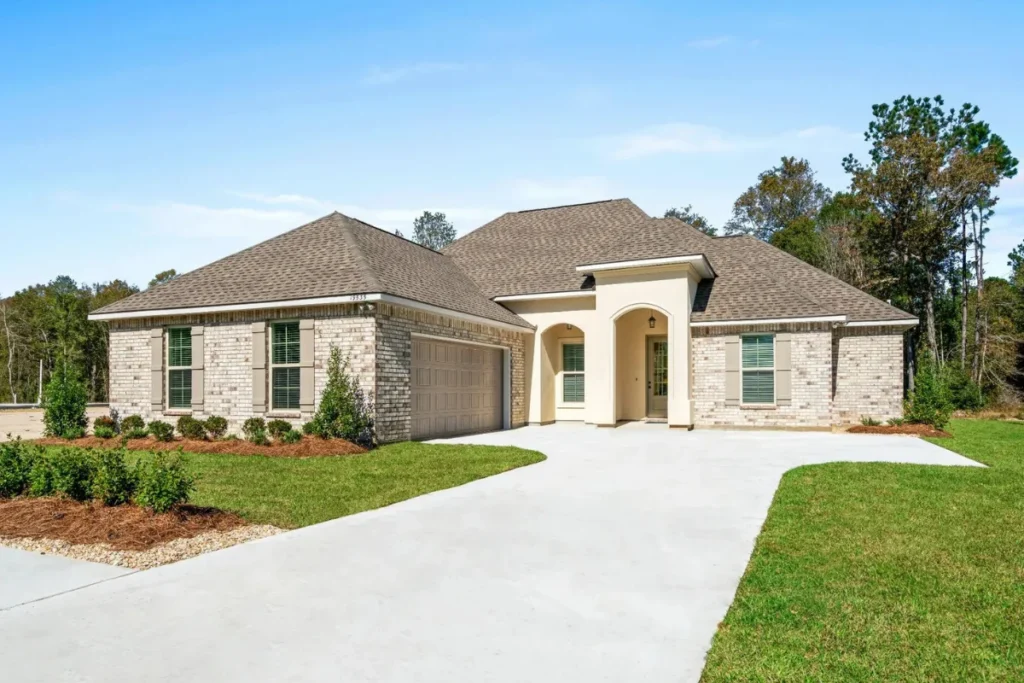
New construction is worth a serious look. About 40% of builders cut prices in late 2025 by an average of 5%, and around two-thirds were offering incentives like closing cost help, upgrades, and rate buydowns. In many markets, new builds are more competitive than they’ve been in years.
Thinking about new construction? Browse communities from DSLD Homes and explore current mortgage offers to go with them.
First-time buyers still face the most pressure. The median age of a first-time homebuyer has climbed to 40, a reflection of how long affordability challenges have kept people on the sidelines. Down payment assistance programs and lender incentives can make a real difference for buyers in this group.
Housing Inventory and Days on Market
More listings are hitting the market, and that’s giving buyers more choices than they’ve had in years. But the full picture is more complicated.
Active listings are up about 20% from a year ago nationally, and homes are sitting a median of 66 days before going under contract, compared to just a couple of weeks during the peak seller market years. That shift is real and it matters for buyers today.
At the same time, the underlying housing shortage isn’t going away. According to Realtor.com‘s 2026 Housing Supply Gap Report, the U.S. is short an estimated 4 million homes, the result of more than a decade of underbuilding that hasn’t kept pace with demand. More listings compared to last year is a welcome change, but it doesn’t mean there are enough homes overall. The gap is widest in the South, where demand has consistently outpaced construction.
What that means practically: if you spot a home that has been listed for 30 days or more, that’s an opening. Negotiate on price, ask for closing cost help, or request a rate buydown from the seller. But don’t assume the right home will always be there if you wait. Well-priced homes in desirable areas still move quickly, and the inventory ceiling is lower than the headlines suggest.
Factors Affecting Buyer Leverage
Buyers in 2026 have more leverage than the inventory numbers alone suggest. Here’s where it shows up.
Seller concessions are back. Closing cost assistance, rate buydowns, and repair credits are all on the table in many markets right now. A seller-paid rate buydown on a $400,000 loan can reduce your monthly payment by $400 to $500. That’s often a better deal than negotiating a lower purchase price.
Contingencies have returned too. Inspection and appraisal contingencies were nearly extinct during the peak seller market. Now they’re standard again in most markets. Don’t skip them. An inspection protects you from inheriting expensive problems, and an appraisal contingency keeps you from overpaying if the home doesn’t appraise.
Price reductions are happening more frequently as well. Sellers who overpriced are adjusting, and buyers who are patient and prepared are benefiting.
One budget item that often gets overlooked: HOA fees. In condos and newer developments, these can run several hundred dollars a month. Always calculate your full monthly housing cost, not just the mortgage payment, before deciding what you can afford.
Regional and Local Market Variations
National averages only tell part of the story. Regional variations in inventory, days on market, and price range mean the market you’re buying in matters as much as anything else. Here’s a look at local trends in the markets DSLD Mortgage serves.
Louisiana: Baton Rouge and the Northshore
Louisiana is one of the more buyer-friendly markets in the country right now. Inventory has grown significantly year-over-year, and homes are averaging around 73 days on market statewide with about 5 months of supply. That’s close to balanced territory, which means buyers have real negotiating room.
Baton Rouge, anchored by universities, state government, and healthcare, is expected to see steady demand and modest price growth. The Northshore communities of Covington and Hammond offer consistent buyer interest and relative affordability. Statewide, home prices are expected to rise in the 2% to 4% range in 2026, making Louisiana one of the more accessible entry points in the country. Across property types, from starter homes to move-up purchases, post-pandemic market dynamics have shifted firmly in the buyer’s favor here.
One factor unique to Louisiana and other Gulf Coast states: homeowner’s insurance. Costs are higher than the national average, particularly in coastal areas. Factor that into your monthly budget before you fall in love with a number.
Alabama: Huntsville
Huntsville is one of the strongest housing markets in the South, and local trends continue to outpace many national averages. Major employers in aerospace, defense, and technology, including Space Command, Eli Lilly, and an FBI campus, are driving steady job growth and sustained demand across every property type.
The market is well-balanced in 2026, with about 5.9 months of supply and homes averaging 56 to 58 days on market. The price range for median homes is holding in the low-to-mid $300,000s. Alabama remains one of the most affordable states in the country to buy, with values expected to see 4% to 7% appreciation in 2026. For buyers priced out of larger metros, Huntsville offers job growth, affordability, and long-term upside in one package.
Tennessee: Nashville
Nashville is in what local agents are calling a “Goldilocks” window for buyers in 2026. Post-pandemic market dynamics have cooled considerably from the frenzy of 2021 and 2022, and the regional variations between Nashville and other major metros are becoming more pronounced as the city settles into a more rational pace. Active listings are up roughly 13% to 17% from last year, homes are averaging around 63 days on market, and the median sale price sits around $530,000.
Buyers have real options here regardless of property type. Inspection contingencies and repair requests are back on the table. Closing cost assistance and rate buydowns are showing up more frequently, especially in new construction. Analysts are projecting moderate price growth of 3% to 5% for the year.
Florida: Pensacola
Pensacola is transitioning toward balanced conditions, with homes averaging 90 to 103 days on market, well above national averages and a clear sign of buyer leverage. Local trends point to a market that has normalized significantly from its post-pandemic highs. The price range for median sale prices runs from around $282,000 to $355,000 depending on property type, making it some of the most affordable waterfront-adjacent housing in the country.
Inventory has grown and sellers are more negotiable than they were a few years ago. Like Louisiana, buyers in Florida should budget carefully for homeowner’s insurance, which runs significantly above the national average in coastal markets. The presence of Pensacola Naval Air Station keeps demand relatively stable year-round.
Implications for Different Stakeholders
The 2026 market looks different depending on where you are in the process.
First-Time Homebuyers
Conditions are better than they’ve been in years, but the market still isn’t easy. You have more time to search, more homes to choose from, and more room to negotiate than buyers have had in a long time. Down payment assistance programs, first-time buyer incentives, and builder programs can help bridge affordability gaps. The most important first step is getting pre-approved early and working with a lender who can walk you through every option available to you.
Move-Up Buyers
If you’re selling your current home and buying something larger or newer, you’re on both sides of this market at once. Your current home may take longer to sell than you expect, so pricing it correctly from day one matters. On the buying side, you have more leverage than you’ve had in years. Work with your lender early to understand how timing, contingencies, and financing work together across both transactions.
Renters Deciding Whether to Buy
Rents are expected to rise 2% to 3% nationally in 2026 as apartment supply slows and demand stays strong. Staying in a rental isn’t a free pass on rising costs. If you plan to stay in an area for three or more years, the math increasingly favors buying, even at today’s rates. Owning locks in your payment and builds equity over time.
Real Estate Investors
Markets with steady job growth and affordability-driven demand, like Huntsville, Baton Rouge, and Nashville, continue to offer solid long-term fundamentals. But investors need to underwrite carefully in 2026. Insurance costs in some markets have climbed substantially. Focus on cash flow and long-term value rather than short-term appreciation.
2026 isn’t a buyer’s market in the classic sense, but it’s the most balanced market buyers have seen in several years. More inventory, longer days on market, real negotiating room, and a slow but steady improvement in affordability are changes worth acting on. If you’ve been on the sidelines, this is the window you’ve been waiting for.
Start by getting prepared. Know your numbers. Get clear on your local market. Find a lender who understands what products and incentives are available to you right now.
At DSLD Mortgage, we work with homebuyers across Louisiana, Mississippi, Alabama, Tennessee, North Carolina, Texas, and Northwest Florida. Our mortgage offers and promotions are designed to make homeownership more accessible, including rate buydown options and other buyer incentives. Any home, any loan. We’re here to help you move forward and find the perfect place.
How much will your mortgage be? You can use DSLD Mortgage’s Mortgage Calculator to estimate your monthly mortgage payment.
Current mortgage rates holding you back? Don’t miss out on these deals! Buy a home with DSLD Mortgage and take advantage of our limited-time mortgage promotions.
Mortgage FAQs
Owning a home is a dream we help bring to life every day. You probably have a lot of questions, and that’s a good thing! Here are the answers to some of the most frequently asked questions we get, designed to make your path to homeownership as smooth as possible.
For many buyers, yes. The housing market in 2026 is more balanced than it has been in several years. Inventory is up, homes are staying on the market longer, and sellers are more willing to negotiate. That said, mortgage rates remain above 6% in most scenarios, and home prices are not declining significantly in most areas. The right time to buy ultimately depends on your personal finances, local market conditions, and how long you plan to stay in the home. If the timing is right for your life, 2026 offers more opportunity than the last few years have.
Most forecasters do not expect a widespread drop in home prices. The national outlook points to modest appreciation of around 2 to 4%, with some local markets seeing flat prices and others seeing slightly more growth. While price reductions on individual listings are becoming more common as the market normalizes, that is different from a broad price decline. Buyers should not count on waiting for significantly lower prices, as inventory growth in many markets is expected to level off later in the year.
Several strategies can help. Getting pre-approved for a mortgage before you start shopping signals to sellers that you are serious and ready. Asking for seller concessions, such as closing cost assistance or a mortgage rate buydown, can lower your effective costs without requiring the seller to reduce the price. Working with your lender to explore all available loan products, including down payment assistance programs, can also make a meaningful difference. In today’s market, how your offer is structured often matters as much as the price.
A mortgage rate buydown is when you or the seller pay money upfront to reduce your interest rate for a period of time or for the life of the loan. A temporary buydown, such as a 2/1 buydown, lowers your rate in the first two years before it returns to the original rate. A permanent buydown lowers your rate for the entire loan term. In today’s market, many sellers and builders are offering to pay for rate buydowns as an incentive. This can save you hundreds of dollars per month in the early years of your loan and may be worth more than a small reduction in the purchase price. Ask your loan officer which option makes the most sense for your situation.
Begin Your Home Search with DSLD Homes

To get a feel for the lifestyle that awaits you in a DSLD Homes community, visit one of their communities throughout the Southern Region.
With a diverse selection of floor plans and communities to choose from, you’re sure to find the perfect fit for your lifestyle.