
Okay, let’s talk real estate. You’re pulling in 110k annually — that’s awesome! You’re probably daydreaming about that perfect kitchen, that spacious backyard, or maybe even a home theater (hey, I don’t judge!). But before you start picking out paint colors, let’s get real about how much house you can comfortably afford. As a mortgage pro, I’m here to break down the numbers and help you find the sweet spot between your dream home and a budget that makes sense.
The Quick Answer
Now, for the burning question: how much house can your 110k salary buy? While a quick estimate might land you somewhere between $330,000 and $550,000, let’s be honest, that’s a pretty wide range! Your actual magic number depends on a few key factors — your credit history, down payment, and even where you want to live. Think of it like this. It’s not just about your income; it’s about your entire financial picture. Let’s break it down together and find your perfect price point.
How Much Home Can You Really Afford on a $110k Salary?
Alright, let’s get down to business. Figuring out your home affordability isn’t just about that 110k salary. It’s a puzzle with several pieces, each playing a crucial role in unlocking your dream home. Let’s break it down:
- Income and The 28/36 Rule: Think of your income as the foundation of your homeownership goals. Lenders often use the 28/36 rule: no more than 28% of your gross income should go towards housing costs and no more than 36% towards total debt (including your mortgage). This helps ensure you can comfortably manage your mortgage payments without feeling house-poor.
- Debt-to-Income Ratio (DTI): Your DTI is a financial snapshot that shows lenders how much of your income goes towards debt payments. A lower DTI generally means you’re a less risky borrower, which can open doors to better interest rates and loan terms. So, keeping your debt in check is key!
- Credit Score: Your credit score is your financial report card. A higher score tells lenders you’re responsible with credit, making you a more attractive borrower. That can translate to lower interest rates and more favorable loan options. It’s worth taking the time to polish up your credit score before you start house hunting.
- Down Payment: This is the upfront cash you bring to the table when buying a home. A larger down payment can reduce your loan amount, leading to lower monthly payments and potentially avoiding private mortgage insurance (PMI). But don’t worry, even with a smaller down payment, options like FHA Loans with down payment assistance programs can make homeownership accessible.
- Interest Rates: Interest rates are like the cost of borrowing money. Lower rates mean lower monthly payments, saving you money over the life of your loan. Keeping an eye on current interest rates and trends can help you time your home purchase strategically.
- Other Financial Obligations: Don’t forget about those other expenses! Student loans, car payments, and credit card debt all factor into your overall affordability. It’s important to have a clear picture of your financial commitments to determine a comfortable mortgage payment.
- Location, Location, Location: Where you choose to live plays a big role in affordability. Housing costs can vary significantly from one city to another and even within different neighborhoods. Factor in property taxes, homeowner’s insurance, and potential HOA fees when considering your location.
Now that you understand the key players let’s see how they interact with your 110k salary to determine your home sweet home budget.
1. Debt-to-Income Ratio (DTI)
Ever heard of DTI? It stands for Debt-to-Income Ratio, and it’s a big deal when it comes to getting a mortgage. Lenders want to see that you can comfortably handle your existing debts and your new mortgage payments.
Most lenders prefer a DTI of 43% or lower, meaning your total monthly debt payments shouldn’t exceed 43% of your gross monthly income. Some lenders might be a bit more flexible, going up to 50% for borrowers with stellar credit and a strong financial track record.
Let’s break that down with your 110k salary. That translates to a gross monthly income of about $9,167. With a 43% DTI, your maximum allowable monthly debt payments would be around $3,942. At 50%, it bumps up to $4,583.
Remember, this includes everything — your potential mortgage payment, car loans, student loans, credit card bills, the whole shebang. To keep things in check and maximize your borrowing power, aim to keep your total debt payments under 36% of your gross income. This gives you some wiggle room and shows lenders you’re a responsible borrower.
2. Credit Score
Your credit score is a three-digit number that tells lenders how responsible you are with borrowing money. The higher your score, the more trustworthy you appear, and the more likely you are to secure favorable loan terms.
Here’s how your credit score can impact your home affordability when you’re earning 110k.
- Excellent Credit (740+): You’re a lender’s dream! With a score this high, you’ll unlock the red carpet treatment: the lowest interest rates, the most favorable loan terms, and maximum affordability. You’ve earned it!
- Very Good Credit (700-739): You’re in great shape! While you might not snag the absolute lowest rates, you’ll still enjoy excellent loan options and a strong affordability range. Keep up the good work!
- Good Credit (660-699): You’re on the right track, but there’s room for improvement. You’ll likely face higher interest rates, which can slightly reduce your affordability. Consider taking steps to boost your score before you apply for a mortgage.
- Fair Credit (620-659): It’s time to give your credit score some TLC. Scores in this range can lead to significantly higher interest rates, which can significantly impact your affordability. Focus on improving your credit health to unlock better loan options and increase your buying power.
Remember, your credit score is just one piece of the puzzle. By combining a healthy credit history with a solid income and manageable debt, you can maximize your home affordability and achieve your homeownership dreams.
3. Down Payment
Let’s talk about the amount of money you’ll need upfront to buy your dream home—the down payment. It’s not just about getting your foot in the door; it’s about securing the best possible loan terms and maximizing your buying power. With a 110k salary, you’ve got options, but understanding how different down payment amounts impact your mortgage is key.
Here’s the breakdown:
- The 20% Power Play: Putting down 20% is like hitting a home run. You’ll wave goodbye to pesky Private Mortgage Insurance (PMI), enjoy lower monthly payments, and potentially snag a lower interest rate.
- The 10-15% Sweet Spot: Don’t have a full 20%? No problem! A 10-15% down payment still puts you in a strong position. You might encounter slightly higher interest rates, and PMI will be part of the equation, but it’s a fantastic way to balance upfront costs with long-term affordability.
- The 5% Fast Track: Want to become a homeowner sooner? A 5% down payment can make that happen. You’ll need less cash upfront, but be prepared for higher monthly payments and PMI. It’s a smart strategy for those who want to enter the market quickly.
Think of your down payment as a lever. A larger down payment reduces your loan amount, leading to lower monthly payments and potentially freeing up more cash flow for other things — like that housewarming party you’ve been planning. Plus, a hefty down payment can be a powerful bargaining chip when competing with other buyers.
Remember, different loan types have different down payment requirements. An FHA Loan, for example, offers down payment assistance programs, making homeownership even more accessible. It’s all about finding the right balance between your upfront costs, monthly payments, and long-term financial goals.
4. Current Interest Rates
As of today, October 28th, 2024, the average 30-year fixed mortgage rate is hovering around 6.875%. Now, you might be thinking, “Okay, so what?” But remember, even a tiny shift in that percentage can make a huge difference in how much house you can actually afford. It’s a ripple effect that can either boost your buying power or shrink it significantly.
5. Other Financial Obligations
When you’re budgeting for your new home, it’s easy to focus solely on the mortgage payment. But smart homebuyers know that the true cost of homeownership goes beyond those monthly principal and interest payments.
Property taxes, homeowner’s insurance, and potential HOA fees can significantly inflate your monthly housing expenses. By understanding these additional costs upfront, you can avoid unpleasant surprises and ensure you’re truly prepared for the financial realities of homeownership.
6. Location
Property taxes and insurance costs can vary significantly by location, significantly impacting a home’s overall affordability. In high-cost areas, this can significantly reduce the price of the home you can afford on a $110,000 salary.
Affordability Scenarios
Let’s look at some realistic scenarios based on a $110,000 salary:
Your gross monthly income plays a crucial role in determining how much home you can afford. Lenders typically use a percentage of your gross monthly income to set affordability guidelines for mortgage payments and to calculate the maximum home price you can afford.
Conservative Scenario:
- 20% down payment
- Excellent credit score (740+)
- No other significant debts
- 30-year fixed rate at 6.25%
Potential home price: Around $450,000
- Monthly payment: ~$3,400 (including estimated taxes and insurance)
- Down payment: $90,000
Breakdown:
- Principal and Interest: $2,220
- Estimated Taxes and Insurance: $1,180
Moderate Scenario:
- 10% down payment
- Very Good credit score (700-739)
- Some existing debts (e.g., $400/month in student loans)
- 30-year fixed rate at 6.5%
Potential home price: Around $420,000
- Monthly payment: ~$3,500 (including estimated taxes, insurance, and PMI)
- Down payment: $42,000
Breakdown:
- Principal and Interest: $2,380
- Estimated Taxes and Insurance: $1,000
- PMI: $120
Aggressive Scenario:
- 5% down payment
- Good credit score (660-699)
- Minimal existing debts
- 30-year fixed rate at 6.75%
Potential home price: Around $480,000
- Monthly payment: ~$4,000 (including estimated taxes, insurance, and PMI)
- Down payment: $24,000
Breakdown:
- Principal and Interest: $2,950
- Estimated Taxes and Insurance: $920
- PMI: $130
Expert Tips for Maximizing Affordability on a 110k Salary
Ready to turn that 110k salary into a home? Here’s how to maximize your buying power:
- Boost Your Credit: A higher score unlocks lower rates and a bigger mortgage.
- Slash Your Debt: Lower your DTI to qualify for a larger loan.
- Supersize Your Savings: A bigger down payment means smaller monthly payments and potentially no PMI.
- Factor in the “Extras”: Remember property taxes, insurance, HOA fees, and ongoing maintenance costs.
- Explore Loan Options: A 15-year fixed mortgage or an adjustable-rate mortgage might be a better fit for your goals.
- Get Pre-Approved: Know your budget and strengthen your offer when you find the perfect home.
The Bottom Line
With a 110k salary, you’re looking at a potential home price between $420,000 and $480,000 — but remember, it’s not just about what you can afford, but what you should. Don’t overstretch your budget!
Think long-term. A home that comfortably fits your finances means more freedom and peace of mind down the road.
Ready to take the next step? Connect with a DSLD Mortgage expert. We’ll help you manage the homebuying journey, explore loan options, and find the perfect mortgage to match your unique needs and goals.
How much will your mortgage be? You can use DSLD Mortgage’s Mortgage Calculator to estimate your monthly mortgage payment.
Current mortgage rates holding you back? Don’t miss out on these deals! Buy a home with DSLD Mortgage and take advantage of our limited-time mortgage promotions.
Article Sources
- Investopedia. “28/36 Rule: What It Is, How to Use It, Example” October 20, 2024
- Experian. “What is responsible lending?” May 2013
- Experian. “What Is Private Mortgage Insurance?” June 27, 2023
Earning 110k? Your Homeownership Questions Answered
So, you’re earning 110k and dreaming of owning your own place — that’s awesome! But the world of mortgages can feel like deciphering a secret code. Don’t worry; we’re here to decode it for you. We’ve gathered the most common questions we get from folks just like you, along with clear, concise answers to help you on your homeownership journey.
That’s a great starting point. With a 110k salary, you could potentially qualify for a home between $420,000 and $480,000. But remember, affordability is a personalized puzzle. Your credit score, debt levels, down payment, and even where you want to live all play a role.
A good rule of thumb is the 28/36 rule. Aim to spend no more than 28% of your gross income on housing costs (including your mortgage payment) and no more than 36% on total debt (including your mortgage, car loans, etc.).
Don’t forget about those! Property taxes, homeowner’s insurance, HOA fees, and even ongoing maintenance can add up. Factor these into your budget to avoid any financial surprises down the road.
Explore DSLD Homes and Find Your Perfect Fit
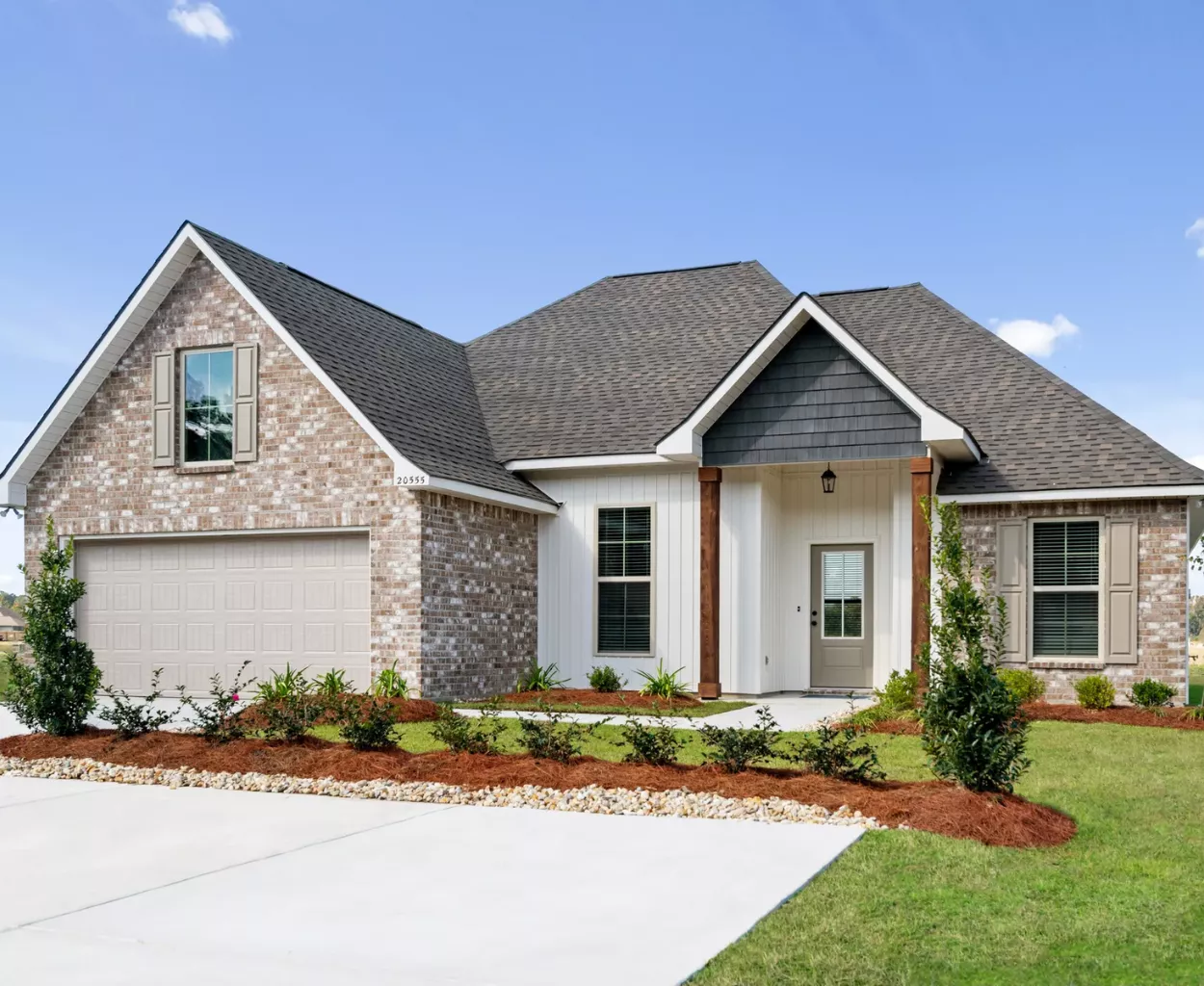
Imagine yourself in a brand-new DSLD home. Picture spacious living areas, a chef-inspired kitchen, and a backyard perfect for gatherings. Ready to turn that vision into reality?
Explore our diverse communities across the Southern Region and discover the DSLD Homes lifestyle. With a wide range of floor plans and stunning locations, your dream home is waiting to be discovered.